深空失忆
Why China's favorability is rising across the Global South_我的网站

A | 对开源模型的需求正在飙升
插图:贾里德·巴特曼
2026年7月21日
想想美国顶尖的人工智能开发者们吧。

A local train driver receivs a notebook from his Chinese predecessor at the Adama station in Adama City, Ethiopia, Sept. 9, 2023. (Xinhua/Wang Guansen)The global perception landscape is changing. For decades, the United States occupied a dominant position in international public opinion. The latest Pew Research Center survey, however, points to a notable turning point: for the first time in more than two decades, China is viewed more favorably than the United States across a larger number of countries.
What explains China's growing appeal?
For many developing countries, China offers a practical development partnership centered on infrastructure, investment, industrialization, technology transfer and trade. Rather than prescribing a single pathway to modernization, it has generally emphasized allowing countries to pursue development in line with their national priorities.
One reason China's influence has grown is that its development model is highly visible. From Ethiopia's railways to Pakistan's power plants, Chinese-financed projects address everyday development challenges by improving transport, energy security and connectivity. Through the Belt and Road Initiative, China has mobilized nearly 1 trillion U.S. dollars in infrastructure investment, producing projects that citizens can see, use and associate with economic progress.
The distinction lies not only in the scale of investment but also in the evolving priorities of development cooperation. While many Western partners have increasingly emphasized economic security, strategic de-risking, private-sector mobilization and governance reform, China has combined large-scale investment in physical infrastructure with technology transfer, industrial cooperation and human capital development.
At the same time, China has actively promoted trade by expanding market access, including granting zero-tariff treatment to many least-developed countries, deepening currency-swap arrangements, and encouraging the use of local currencies in cross-border trade. Together, these measures seek to strengthen economic connectivity, reduce transaction costs and exchange-rate risks, and create new opportunities for developing countries to integrate into regional and global value chains.
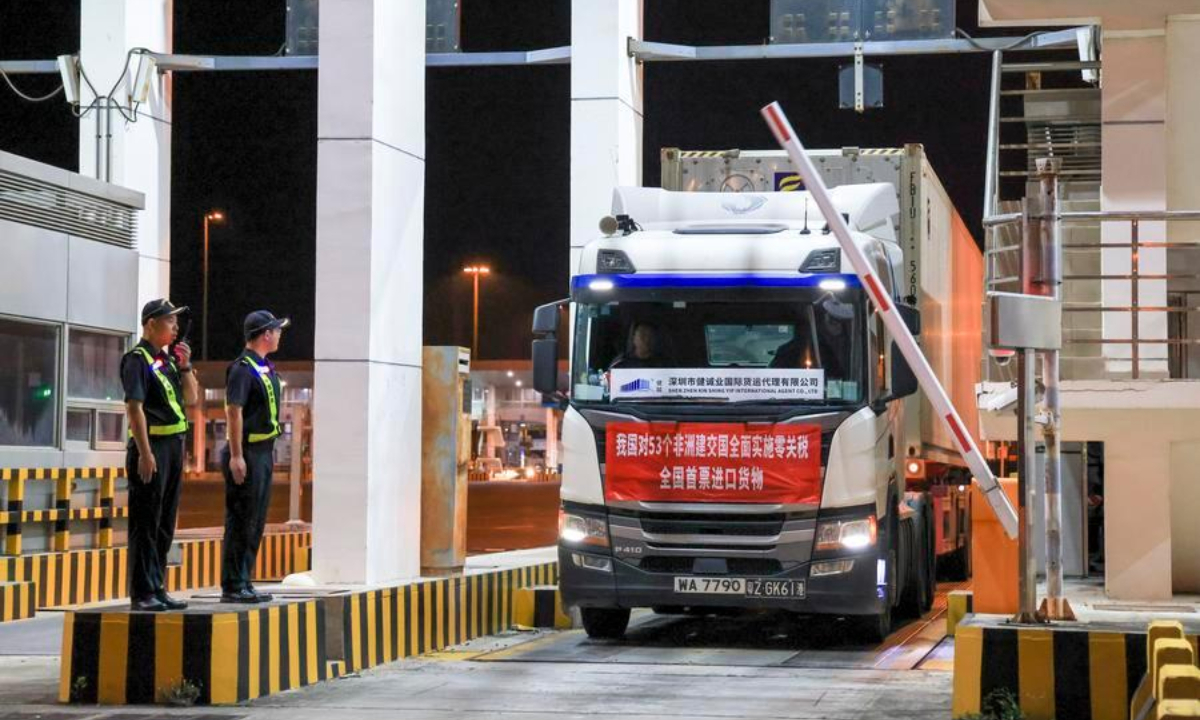
A container truck, transporting the first batch of imports under China's expanded zero-tariff treatment to 53 African nations, enters Shenzhenwan Port in Shenzhen, south China's Guangdong Province, May 1, 2026. (Xinhua/Mao Siqian)
This integrated approach has produced tangible improvements in productivity, connectivity and local capacity, reinforcing perceptions of China as a long-term development partner.
Equally important is the philosophy underpinning China's engagement. Beijing consistently emphasizes sovereignty, mutual respect and non-interference, maintaining that every country should determine its own political and development path. For many governments across the Global South, this approach is a partnership based on equality rather than political conditionality, allowing them greater policy space to pursue domestic development priorities.
Diplomatic style has also influenced perceptions. Through mechanisms such as the Forum on China-Africa Cooperation and regular engagement with Pacific Island countries, China has committed itself to equality and shared development. For many governments in the Global South, that sense of respect and recognition is not merely symbolic -- it contributes to long-term political trust.
Perhaps the most important nuance is this: the Global South is not becoming anti-American; it is becoming strategically pragmatic. Its foreign policy decisions are increasingly guided by national interests, economic opportunity, and development priorities rather than Cold War-style geopolitical alignment.
The Global South's primary ambition is neither ideological nor geopolitical -- it is developmental. Governments want to create jobs, eliminate poverty, modernize infrastructure, strengthen industrial capacity and improve the quality of life for their citizens. China's transformation over the past four decades, from lifting hundreds of millions of people out of poverty to becoming a global leader in infrastructure, manufacturing and technology, has demonstrated what sustained long-term planning can achieve. Consequently, many developing countries are looking to China not as a model to replicate wholesale, but as a development partner from which they can learn, cooperate and pursue shared prosperity while preserving their own policy autonomy.
This contrast is also reflected in broader policy priorities. At a time when many Western governments are increasingly emphasizing tariffs, export controls, technology restrictions, sanctions and economic security, China has continued to promote infrastructure investment, trade, industrial cooperation, technology partnerships, open-source AI initiatives and greater access to its domestic market. Whether one agrees with either approach or not, many developing countries evaluate partnerships primarily through the lens of economic development and tangible outcomes. That difference in emphasis is helping reshape global perceptions.
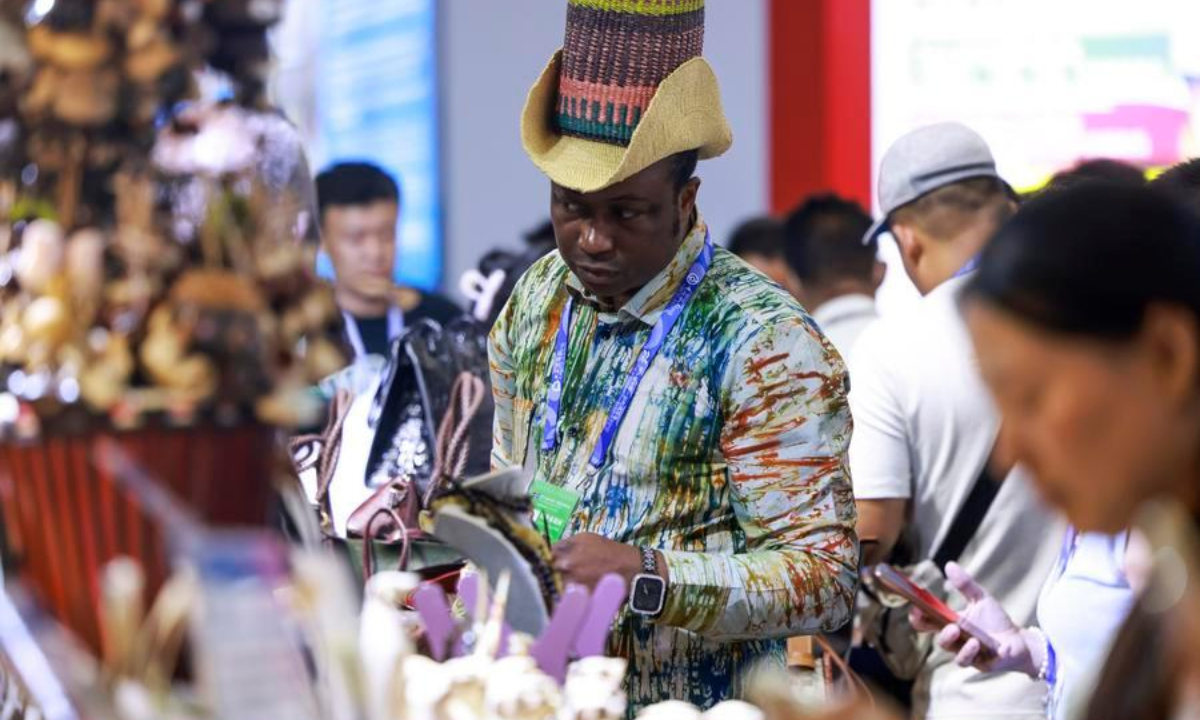
A staff member arranges exhibits at the booth of Nigeria during the 9th China-Eurasia Expo in Urumqi, capital of northwest China's Xinjiang Uygur Autonomous Region, June 25, 2026. (Xinhua/Wang Fei)
The world is changing, and the transition toward a more multipolar international order is becoming increasingly evident. The Global South is no longer a passive participant in world affairs. Its countries are exercising greater strategic autonomy, making decisions according to their own national interests, development priorities and the aspirations of their people. In China, developing countries have found a true friend and good partner.
Editor's note: Maya Majueran serves as the director of the Belt and Road Initiative Sri Lanka, an independent and pioneering organization with strong expertise in Belt and Road Initiative advice and support.
。他们为每一个前沿模型的发布都倾注了无数心血、汗水和巨额资金。然而,还没等他们喘口气,竞争对手就已经迎头赶上。如果只有那些收费的竞争对手紧追不舍,那还算不错。

B | 但像Anthropologie和OpenAI这样的公司,还得拼命追赶那些免费提供模型的公司,才能勉强保持领先。
7月16日,中国初创公司Moonshot AI发布了Kimi K 3模型,其性能仅略逊于Anthropic和OpenAI的最新产品Fable和Sol。该模型的参数(或称“权重”)将于本月晚些时候免费公开,这意味着用户可以下载并在任何支持该功能的服务器上运行它。7月19日,中国互联网巨头阿里巴巴也发布了其Qwen系列模型的新成员预览版,该公司称该模型的性能仅次于Fable。

C |
据研究公司Epoch AI的分析,目前最强大的开源权重模型(通常来自中国)与该技术的前沿水平仅相差数月(见图表)。这些系统的应用正在迅速普及。

D | 5月份,OpenRouter(一个热门的模型交易平台)的客户对美国顶级实验室提供的系统的使用量与对中国顶级实验室提供的系统的使用量基本持平,这是根据代币消耗量(业内常用的产出单位)来衡量的。次月,美国模型的使用量增长了三分之二,而中国模型的使用量则增长了两倍。
这不仅令美国顶尖的模型开发商感到不安,也令美国政府感到担忧,他们担心美国在人工智能领域的领先地位会因此丧失。据说,特朗普政府内部一些人士正在推动采取各种措施来减缓中国模型的传播。然而,美国政府在授予Fable和Sol等先进模型访问权限方面采取的反复无常的做法,也促使人们开始采用中国开发的开源替代模型。
早在K3发布之前,中国的开放权重模型就已引起全球关注。

E | 中国另一家实验室Z.ai于6月推出的GLM -5.2模型,在诸如软件开发等所谓的智能体任务上,表现优于美国另一家顶级模型开发商谷歌目前提供的任何模型。

F | 另外两家中国实验室DeepSeek和MiniMax的模型也广受欢迎。据Firefox浏览器开发商Mozilla的一份报告显示,开放权重模型在前沿推理和复杂智能体任务方面仍处于落后地位,目前已被广泛认为足以胜任许多任务。
它们的成本也低得多——这在企业努力应对人工智能成本不断上涨的问题时是一项重要的优势。另一家研究公司 Artificial Analysis 会追踪选定模型在其测试套件中执行每项任务的成本。

G | DeepSeek 提供的最强大的系统平均每次任务的成本为 0.04 美元。尚未开源的K3平均成本为 0.95 美元。Fable 的用户预计需要支付 2.75 美元。
成本差异的部分原因在于,几乎任何云服务提供商都可以出售开放权重模型的访问权限,从而拉低利润率。例如,DeepSeek 提供其 v4 闪存模型的访问权限,价格为每百万代币 0.28 美元,而最便宜的第三方服务提供商的价格为每百万代币 0.18 美元。
此外,许多开源模型在训练时特别注重高效运行,部分原因是由于美国对先进芯片的限制,中国实验室在获取计算能力方面面临挑战。诸如“专家混合模型”之类的创新技术已被开源模型开发者广泛应用,该模型仅激活人工智能系统中与查询相关的部分,DeepSeek 和阿里巴巴等实验室在该技术领域取得了长足进步。
然而,开源模型的吸引力远不止于此。

H | 由于美国政府仓促试图阻止除美国公民以外的所有人使用Fable模型,导致该模型在全球范围内停用三周,这促使许多公司重新审视自身对独立实验室的依赖。这促使他们尝试使用开源替代方案,这些方案可以通过多个供应商访问,甚至可以在内部服务器上运行。Mozilla首席技术官拉菲·克里科里安指出,这一事件犹如一声“警钟”。
Current article:http://969b57.shaihanhuangwoshang.cyou/list_zc9/xbm7i87.html
Published on:21:11:25
 文旅集团开展消防安全培训演练活动
会痛的十七岁
文旅集团开展消防安全培训演练活动
会痛的十七岁
 Aung San Suu Kyi sentenced to 3 yrs in prison
千图网
Aung San Suu Kyi sentenced to 3 yrs in prison
千图网
 581亿,北大校友又干出一个AI独角兽
鬼吹灯之牧野诡事
581亿,北大校友又干出一个AI独角兽
鬼吹灯之牧野诡事

 微信
微信 移动端
移动端


